Travel Like A Local: The importance of responsible travel
We love to welcome visitors to our home! Whilst here, you’re bound to forge authentic connections with residents who are contagiously passionate about stewardship values; it’s a characteristic naturally woven into life here.
Travelling responsibly pays respect to custodians, both historical and contemporary, and supports the preservation of the wild beauty of our coast and the incredible web of life it sustains for generations to come. To get ahead on how to be a great guest while here, and maximize your enjoyment, here are some tips and tricks.
Get involved with local non-profit engagement
Beyond your own choices, like following Leave No Trace principles, being water-wise, and swapping the car for bike and foot thanks to our extensive trail systems, several vibrant non-profits make taking action toward conservation increasingly accessible.
Redd Fish Restoration Society exists for “the love of wild salmon,” which means their outreach and initiatives cover the wider wellbeing of riparian zones, creeks, rivers, and watersheds. Get to know Redd Fish through:
Surfrider Pacific Rim is the local chapter for the national organization focused on protecting beaches and the coastline through initiatives like plastic reduction, beach clean-ups, advocating for clean water, and equitable beach access. They empower people to take steps themselves, bolstered by helpful education and their community spirit. While visiting, you can:
- Visit the ReSurf building to get inspired by local advocates
- Have your wetsuit fixed or recycled, along with your surfboard, through ReSurf
- Keep an eye on the events calendar for pop-up gatherings
- Join the MUG MOVEMENT campaign to eliminate single-use plastic coffee cups and lids
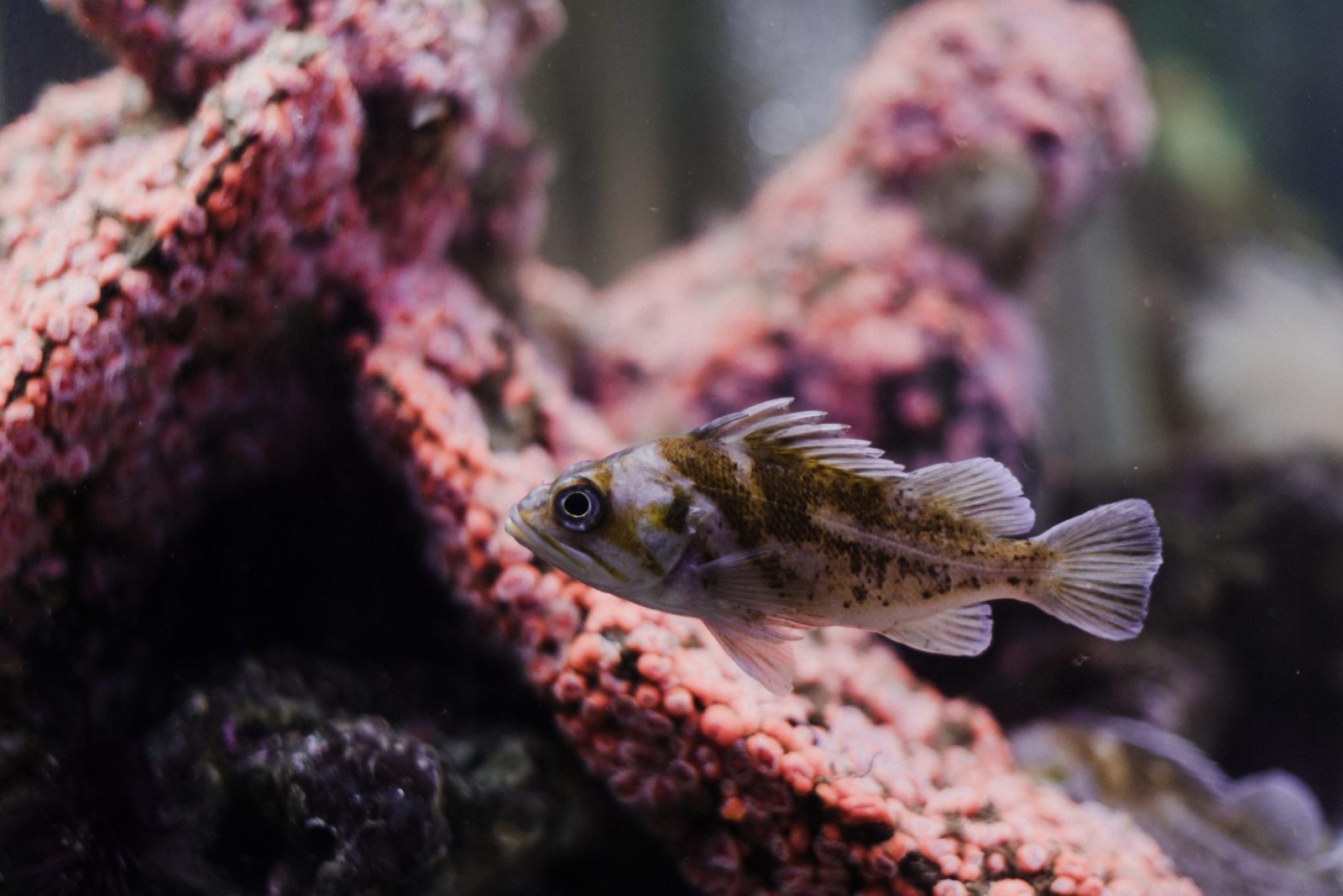
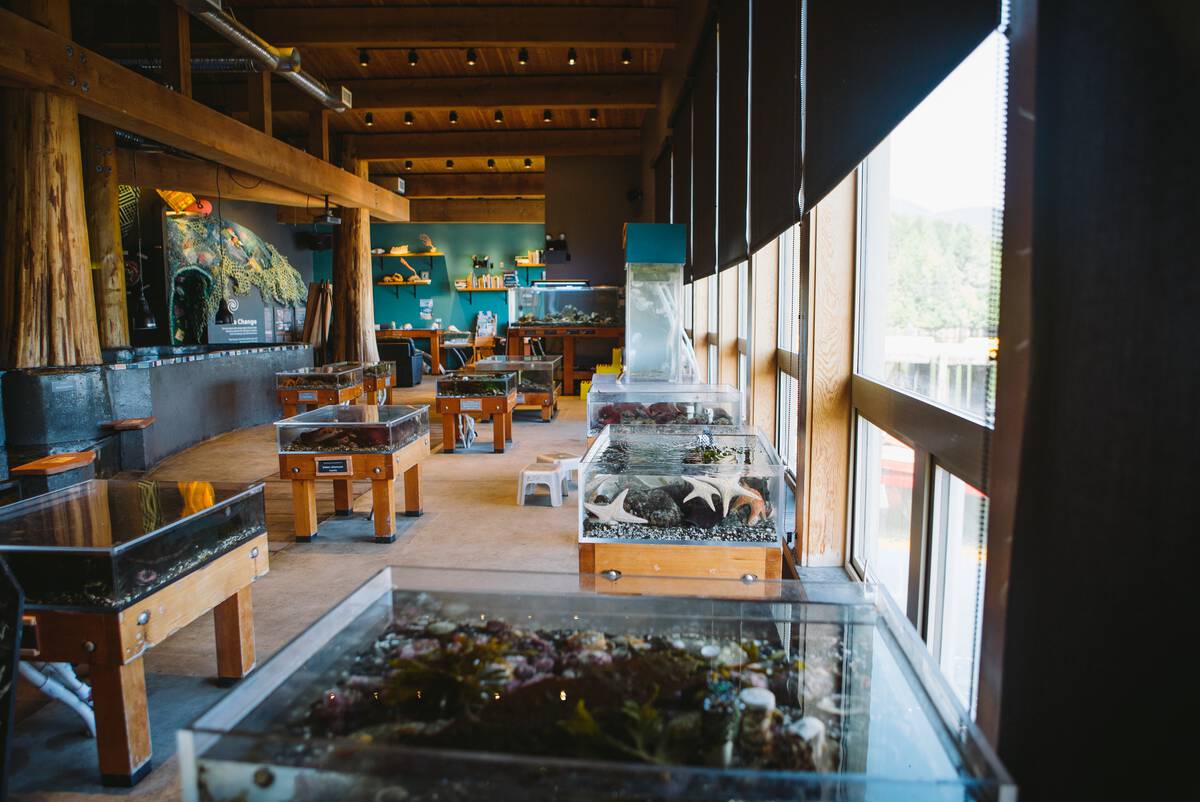
The Ucluelet Aquarium is a popular destination for lively connections to the intricacies of our coast’s underwater world. Operations are deeply rooted in responsible community values and run from March 1 to November 30th.
- Tour the tanks that facilitate the aquarium’s catch-and-release program
- Immerse in the delights of public-facing speaker series on various topics
- Do the Salmon Trail in July and August, in partnership with Redd Fish
- Settle into creative, hands-on learning zones for the whole family
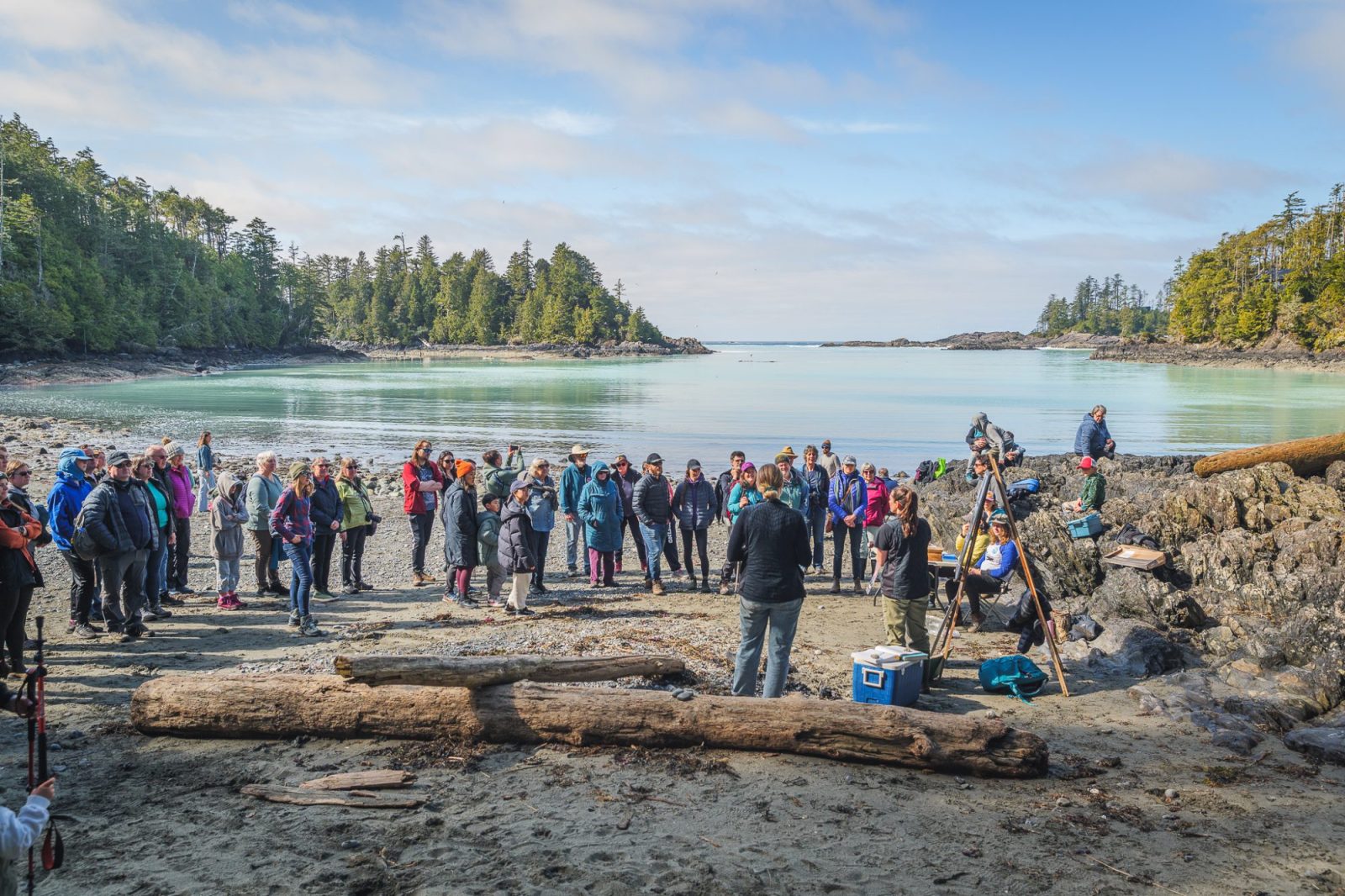
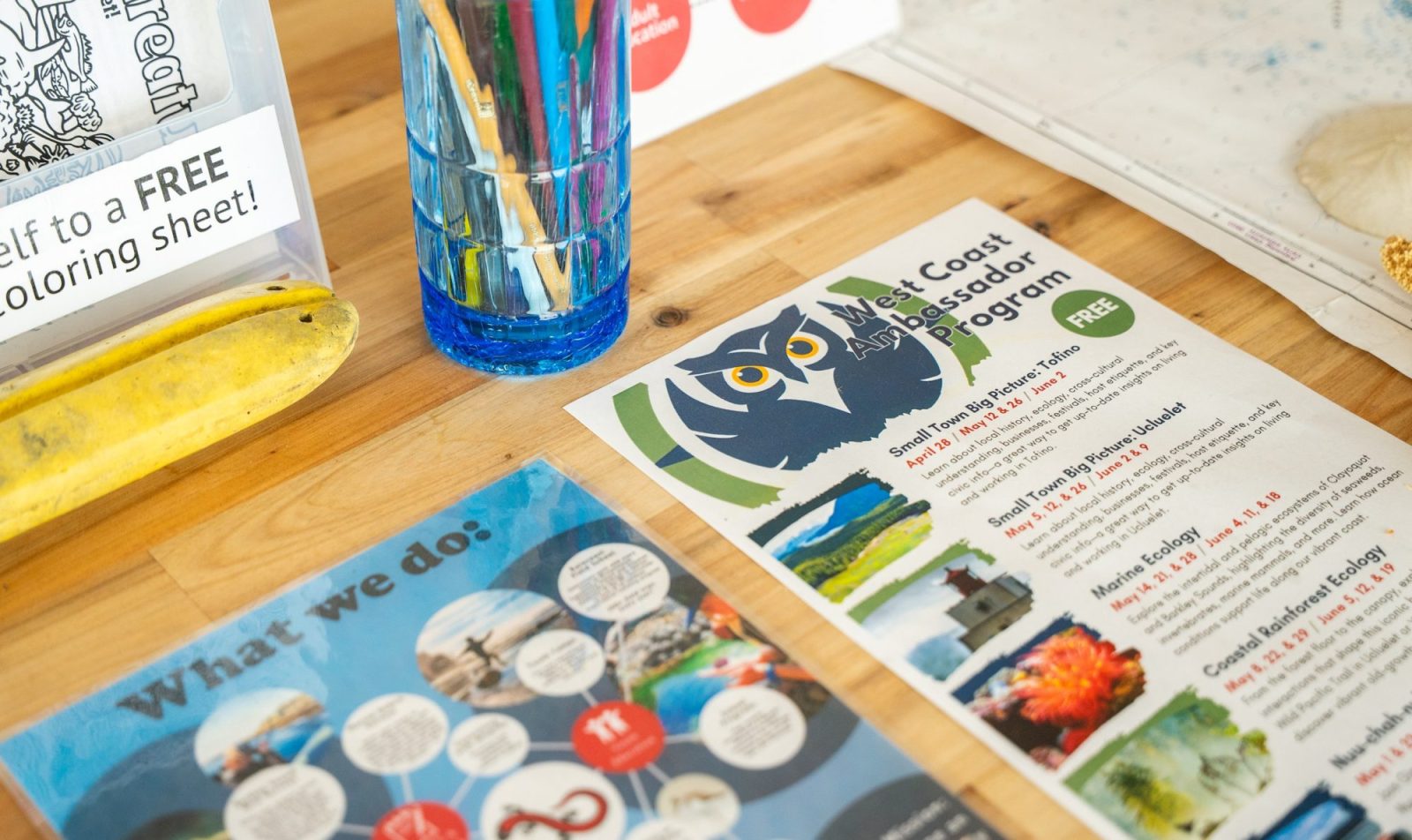
Raincoast Education Society provides compelling youth and adult education for residents on topics tied to healthy ecosystems and community well-being. They also conduct research and monitoring programs, particularly in Clayoquot Sound and Barkley Sound. As a visitor, bring your curiosity and questions to them at the Amphitrite Interpretive Centre on weekdays, or attend the Shorebird Festival.
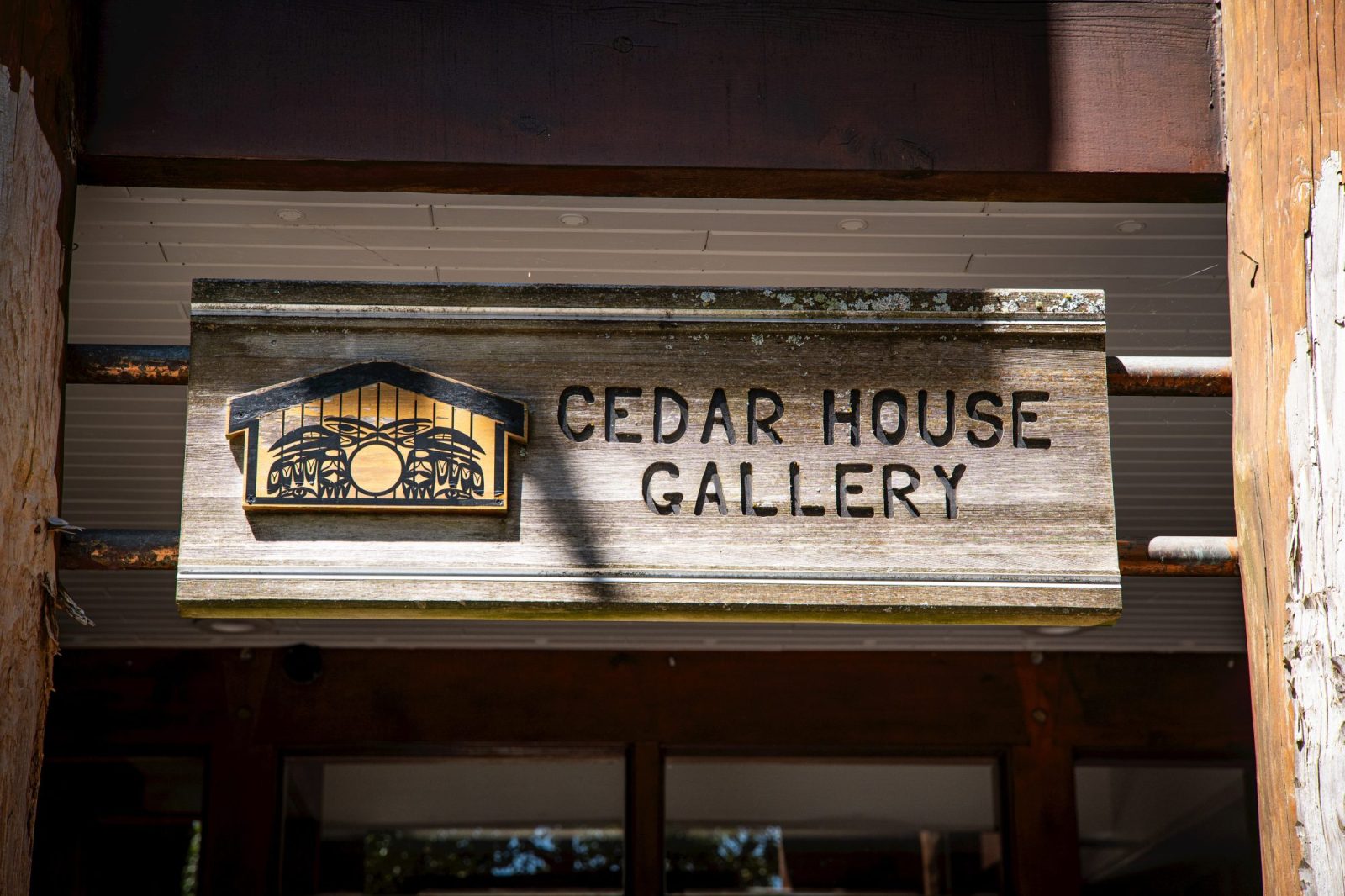
Cultural and arts organizations, like Pacific Rim Arts Society and the Ucluelet Historical Society, are also fantastic vessels to get to know our residents, delve deeper into stories and creative expression sparked by our natural world, and deepen your knowledge of the region’s dynamic history. Discover exhibits and events throughout the year, like the Cultural Heritage Festival and Guided Historic Boat Tours of Ucluelet Harbour.
Indigenous Culture and Learning (Yuułuʔiłʔatḥ – Ucluelet First Nation)
The lands and waterways that Ucluelet is situated within have been inhabited and stewarded for over 10,000 years by the Yuułuʔiłʔatḥ (means Ucluelet First Nation).
It is vital to visit places of cultural significance—both historical and contemporary—with awareness and respect. Learning opportunities exist in venues, but also, like so much of Ucluelet’s community and character, in situ outdoors with stories and living traditions so deeply tied to our ecosystems.
Some ways to be informed and engage with Yuułuʔiłʔatḥ perspectives:
- Appreciate artistic expressions like totem poles and carvings that share stories and symbolism
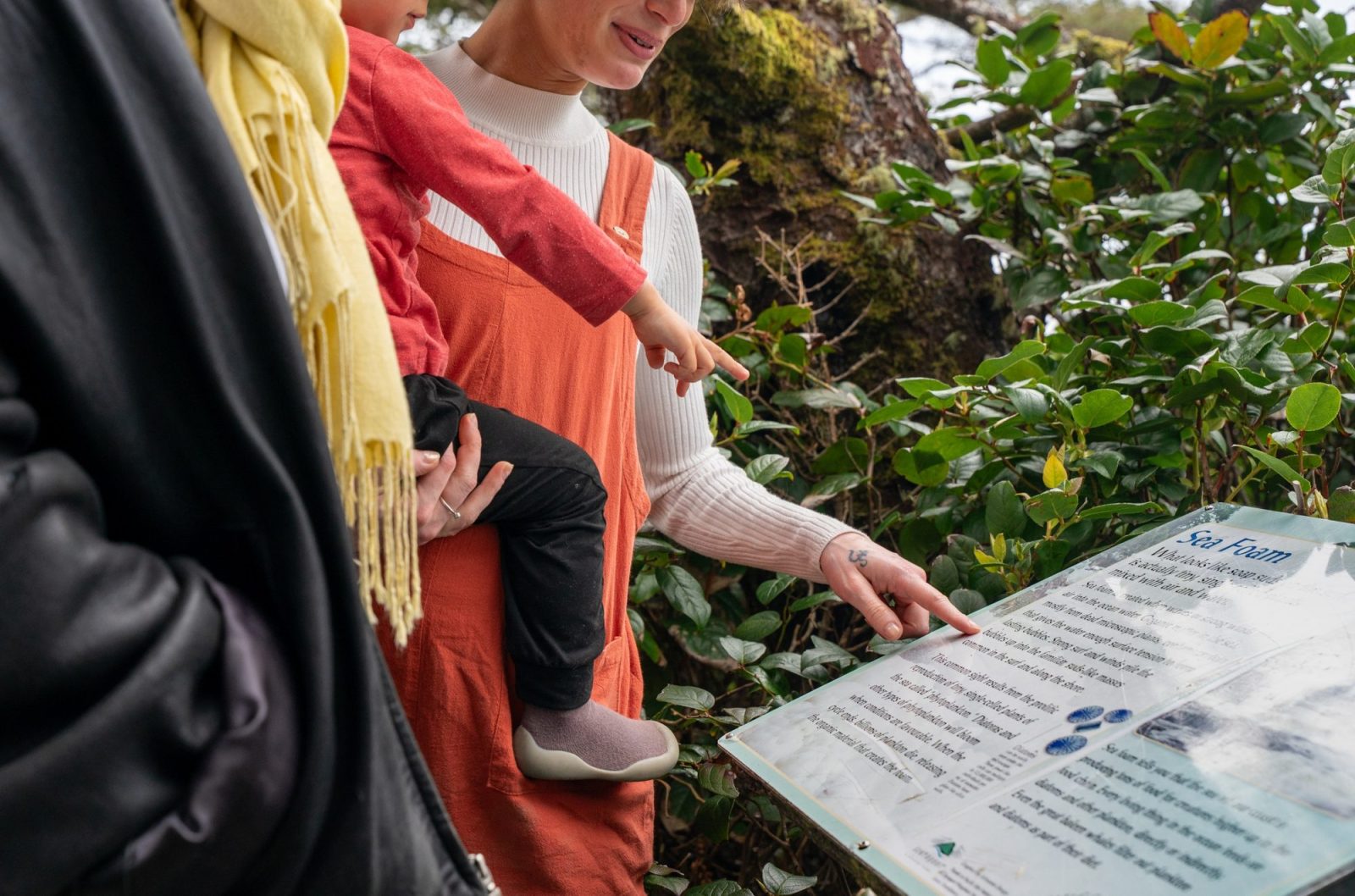
- Take your time reading Yuułuʔiłʔatḥ interpretive signage in parks and on trails
- Take notice of bilingual street signs and other landmark names that honour the traditional territory of the Yuułuʔiłʔatḥ
- Pause to listen to Yuułuʔiłʔatḥ words for flora, and explanations of First Nation values, at audio Voice Boxes along the Wild Pacific Trail
- Support Indigenous-owned businesses and tour operators to hear Indigenous perspectives first-hand
- Look for the “Authentic Indigenous” designation from Indigenous Tourism BC to help guide their choices
Sparking stewardship in youth
Ucluelet is a wonderful destination for young family members to connect with nature and discover the spark of stewardship. Wrap up whatever the weather and take a guided nature walk through lush rainforest ecosystems. Being mindful of the tides, explore tide pools for all manner of sea stars, small fish, and other creatures. Remember that whichever ecosystem you’re exploring, look, but don’t touch! Why not make a game of collecting any trash you see on the beach while you’re here? Rustle up your own reward at one of our cozy cafes afterward for the most collected.
Many of the organizations have youth-specific activations and events, while brick-and-mortar spaces host interpretive zones for the whole family. The Ucluelet Aquarium, in particular, is a welcoming, inclusive hotspot for creating moments of wonder and awe.
Wildlife safety and ethical viewing
Located in such lively and complex ecosystems, it’s no wonder that Ucluelet is home to such diverse wildlife. Move through our community like our locals: those who know how to safely coexist, and carry deep resonance and respect for the success of the non-human inhabitants of this region.
Bears, wolves, and shorebirds are just some of the wildlife to be mindful of. Several bylaws and best practices exist that all visitors should be aware of:
- Feeding wildlife is illegal
- Dogs must be on leash within the District of Ucluelet and the Pacific Rim National Park Reserves
- Stay up-to-date on areas completely closed to dogs, including seasonal closures
- Secure food in cars or buildings, and keep campsites clean of any attractants
- Maintain legal distances at a minimum from all wildlife
- Keep out of sensitive bird nesting areas
- Leave only footprints to eliminate damage, habituation, or ingestion
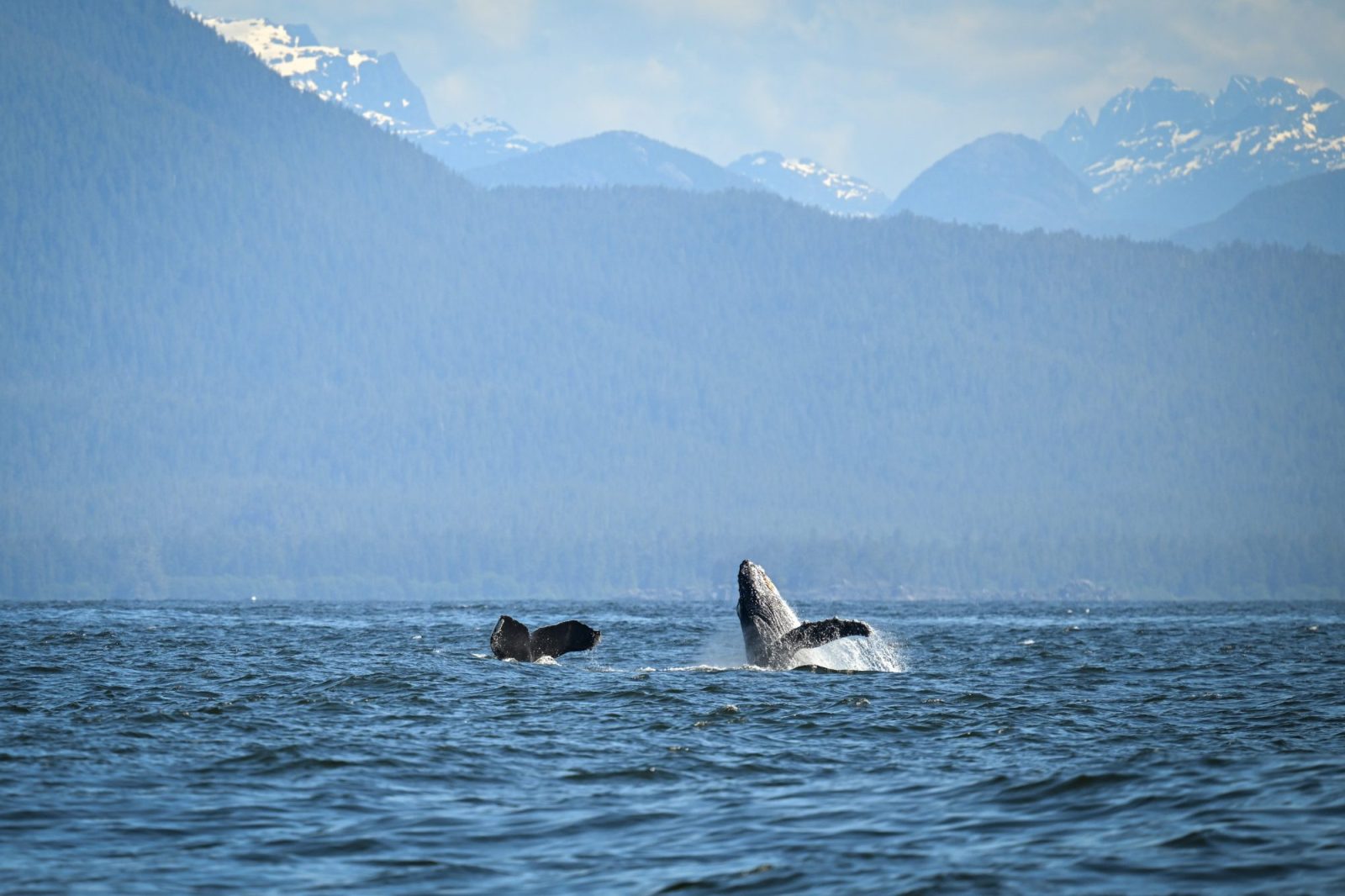
Best practices also exist for encounters with incredible resident and migratory marine mammals, like whales, sea lions, and seals:
- Choose licensed, local operators guided by ethical values for any wildlife watching tours
- Abide by regulated distances, such as 100 metres for whales, porpoises, seals, and sea lions, and 200 metres for orca, especially when paddling or boating
Visit WildSafe BC and the Marine Education Research Society (MERS) to learn more about preventing conflict with wildlife.